KiMA is a free, browser-based gait analysis suite built for researchers studying locomotor recovery after spinal cord injury. It takes pose-estimation data from DeepLabCut and turns it into publication-ready kinematic plots, gait parameters, and statistical summaries — all without installing any software.

Developed by Manojkumar at the Venkatesh Lab, KiMA supports five experiment paradigms: ladder rung walking, foot-fall pattern detection, CatWalk spatial analysis, treadmill locomotion, and multi-animal batch comparison with PCA.

Key Features

No Installation Required

Runs entirely in your browser. Your data stays on your machine — nothing is uploaded to any server.

DeepLabCut Integration

Directly reads CSV files exported from DeepLabCut. Just make sure your body-part labels match the expected naming convention.

Interactive Visualizations

Powered by Plotly.js — zoom, pan, hover for values, and export high-resolution figures for publications.

Batch Processing & PCA

Process entire cohorts at once, assign treatment groups, and run principal component analysis to compare across animals.

Publication-Ready Exports

Export plots as SVG/PNG, download gait metrics as CSV, and generate animated gait sequence videos.

Privacy First

All analysis runs client-side in JavaScript. No data leaves your browser — suitable for pre-publication and sensitive datasets.

Analysis Modules

Ladder & Rung

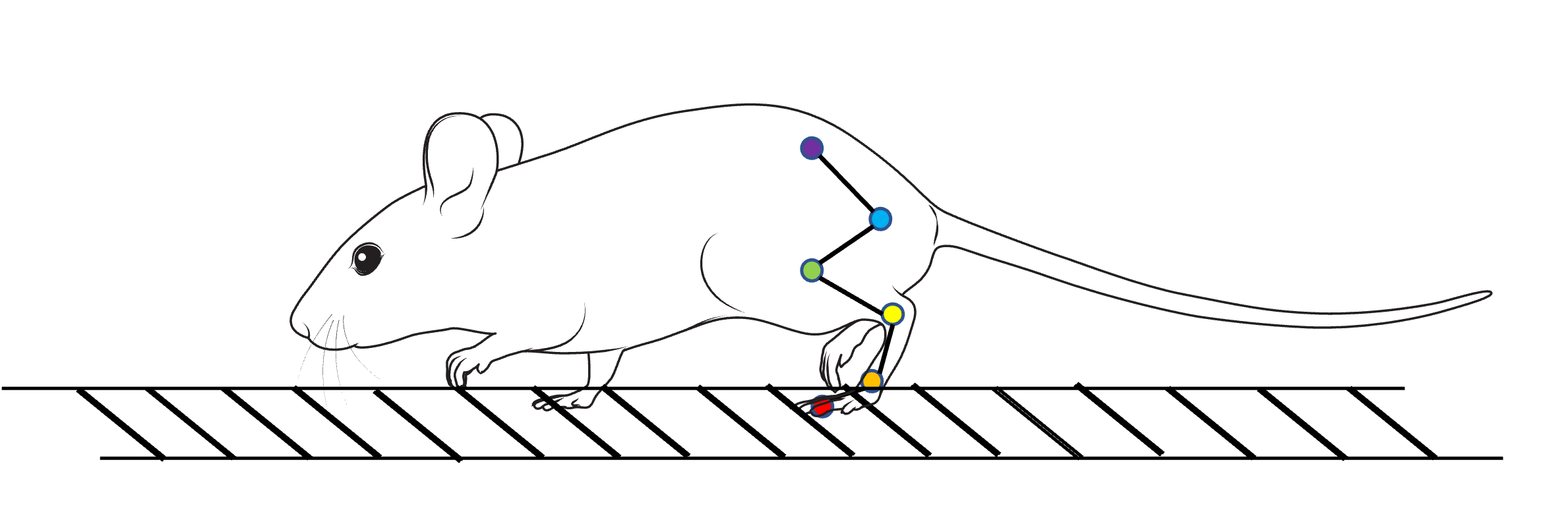
Single-trial hindlimb kinematics from ladder/rung walking. Generates stick figures, joint angles, gait cycle parameters, and animated sequence playback.

Labels: toe, mtp, ankle, knee, hip, iliac crest Open →

Foot Fall

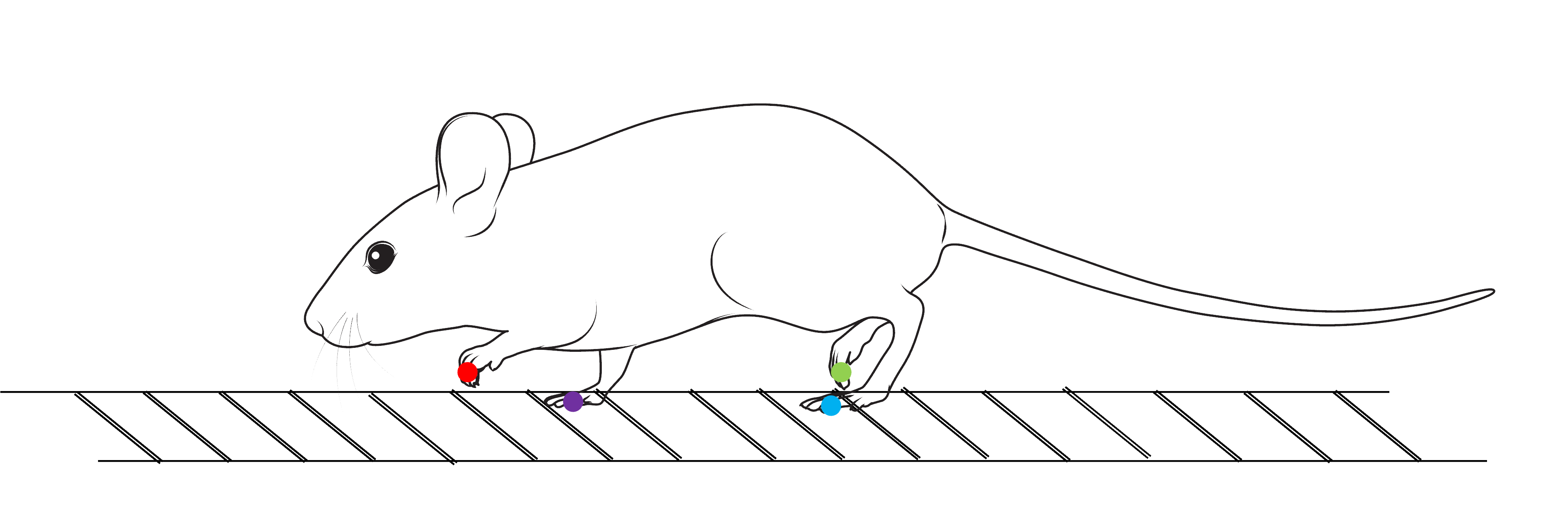
Detect ground contacts for all four paws, visualize contact-peak signals, generate paw-specific 2D trajectory plots and per-paw videos.

Labels: RF, LF, RH, LH (x, y, likelihood) Open →

Cat Walk

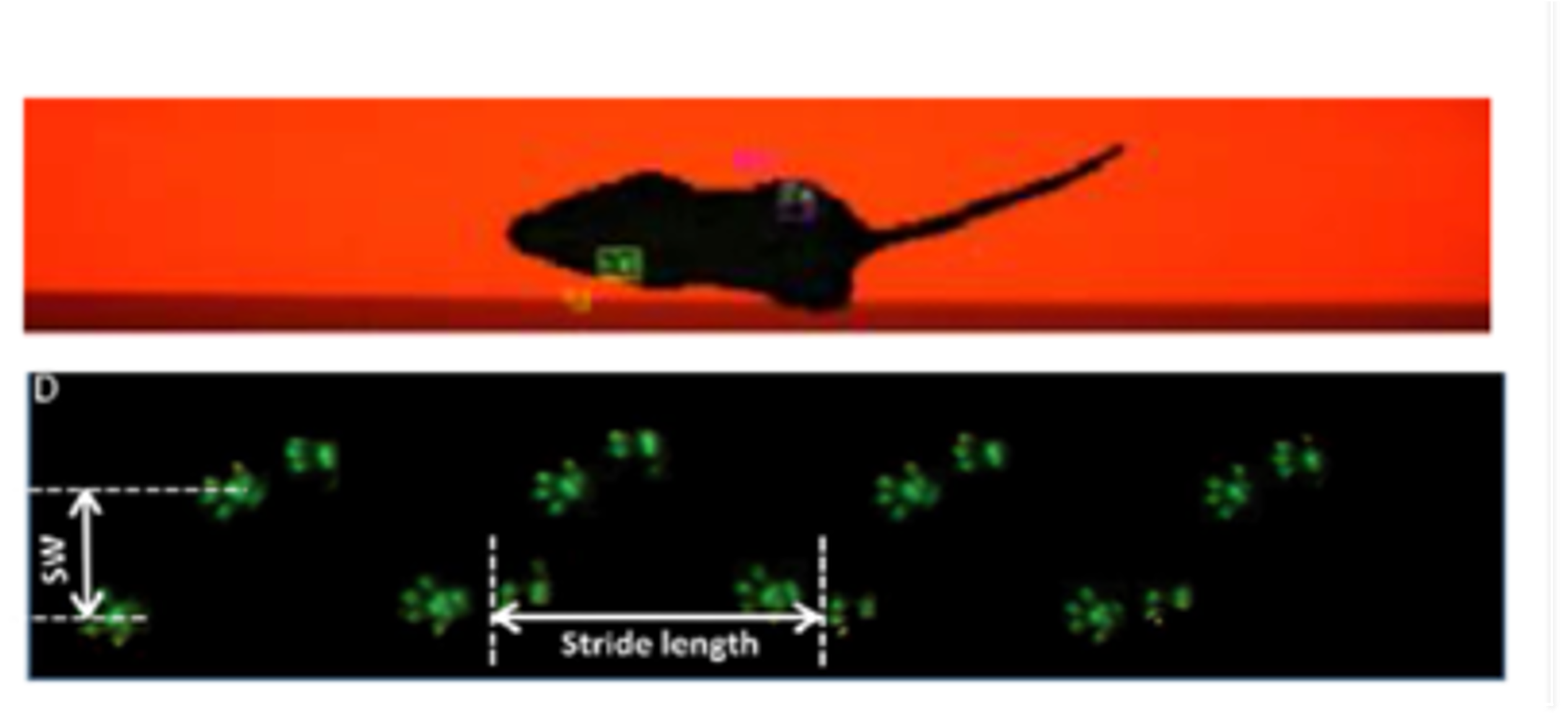
Spatial stepping analysis along a walkway. Calculates projected paw-contact maps, per-paw stride length, and fore/hind stride width.

Labels: RF, LF, RH, LH with paw coordinates Open →

Treadmill

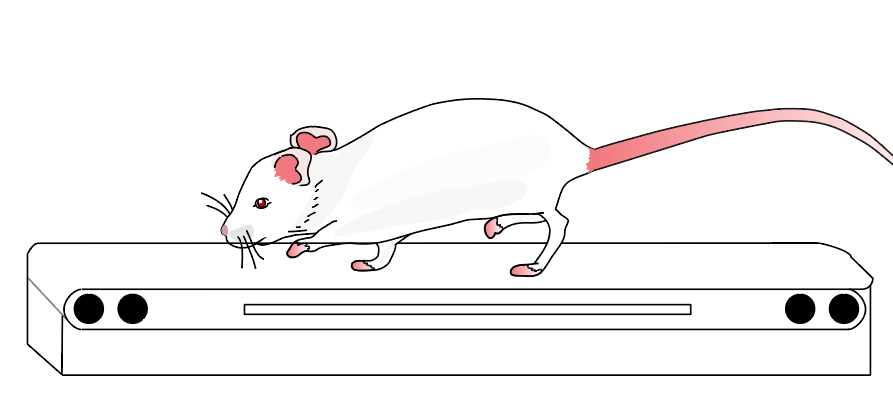
Continuous locomotion analysis with stick-figure player, cycle-by-cycle trends, joint-angle distributions, and early/mid/late block comparisons.

Labels: toe, mtp, ankle, knee, hip, iliac crest Open →

Batch & PCA

Process multiple animals in one session, assign treatment groups (e.g., SCI vs. sham), export combined metrics, and run PCA for group-level comparison.

Upload multiple CSVs from any single-trial module Open →

Quick Start

1 Pick the module Choose the tool that matches your experiment type (ladder, foot fall, catwalk, or treadmill).
2 Check your labels Ensure your DeepLabCut CSV has the required body-part names. See the Manual for the full list.
3 Load data or try examples Upload your CSV or click "Load Example Data" inside any module to test the workflow with sample files.
4 Analyze and export Review interactive plots, tune settings if needed, then export figures (SVG/PNG), CSV metrics, or gait videos.

Supported Data Format

KiMA reads CSV files exported from DeepLabCut. The first three rows contain metadata (scorer name, body-part labels, and coordinate axes). Data rows follow with frame-by-frame x/y coordinates and likelihood scores for each tracked body part.

Each module expects specific body-part label names. If your DLC project uses different naming, rename the columns in the CSV header before uploading. Every module includes built-in example data so you can try the full workflow before using your own files.

Ladder and rung module
Single Run

Ladder & Rung

Use this for one hindlimb run from a ladder or rung experiment. This is the main single-sample kinematic workflow.

  • Required labels: `toe`, `mtp`, `ankle`, `knee`, `hip`, `iliac crest`.
  • What it shows: interactive stick plot, gait parameters, angle distributions, per-cycle gait metrics, and sequence playback.
  • Best use: checking one animal or one trial in detail before going to batch analysis.
  • How to use it: upload one CSV, inspect the plot first, then open Gait Parameters and Statistical Analysis, and finally export images or CSV outputs.
Foot fall module
Paw Contact

Foot Fall

Use this for paw-contact analysis when the key question is where and when each paw touches during locomotion.

  • Required labels: `RF`, `LF`, `RH`, `LH` with `x`, `y`, `likelihood`.
  • What it shows: foot-fall counts, paw-only 2D plots, contact-peak signals, separate paw videos, and contact tables.
  • Best use: simple visual interpretation of paw contact pattern and stance timing.
  • How to use it: upload the paw CSV, tune likelihood and movement thresholds if needed, then review counts, contact peaks, and paw videos before exporting results.
CatWalk module
Runway Geometry

Cat Walk

Use this for runway paw-placement analysis when you want stride length and stride width rather than full hindlimb joint kinematics.

  • Required labels: `RF`, `LF`, `RH`, `LH` with paw coordinates.
  • What it calculates: projected paw-contact map, stride length per paw, and fore/hind stride width.
  • Best use: spatial stepping analysis along a walkway or CatWalk-like setup.
  • How to use it: upload the CatWalk-style CSV, verify the projected map looks correct, then review the stride length and width plots and export the metrics table.
Treadmill module
Continuous Run

Treadmill

Use this for continuous treadmill gait where the interest is cycle behavior across time, stability, and trend changes during the run.

  • Required labels: `toe`, `mtp`, `ankle`, `knee`, `hip`, `iliac crest`.
  • What it shows: treadmill player, cycle summaries, joint-angle distributions, per-cycle trends, and early/mid/late comparisons.
  • Best use: continuous locomotor monitoring rather than single-step inspection.
  • How to use it: upload the treadmill CSV, review the stick player first, then inspect cycle trends and block comparisons before exporting the cycle table or images.